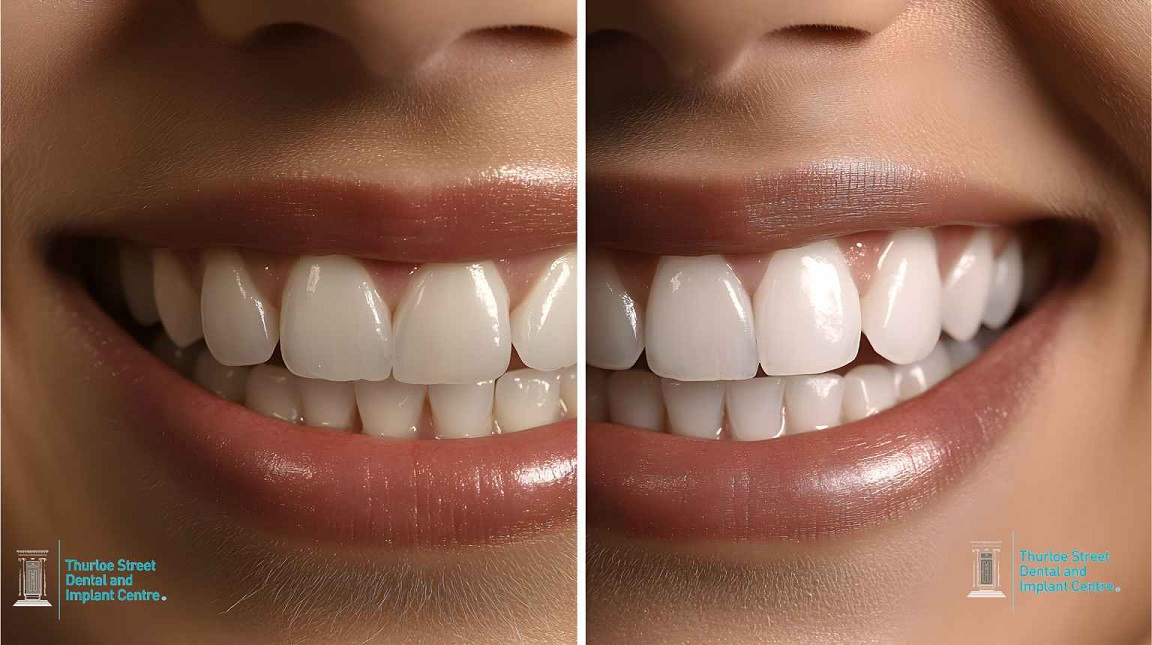
You notice it in the mirror when the light hits your smile from the side: a dark edge where an old filling sits, a small chip that catches, or a tooth that looks slightly shorter than it used to. The question that follows is usually practical, not cosmetic: “Do I need a filling, or can this be bonded?”
That’s where the comparison between white fillings vs composite bonding matters. They often use the same tooth-coloured material, but they’re used for different reasons, prepared differently, and designed to solve different problems.
White fillings vs composite bonding: what’s the real difference?
A white filling is primarily a repair. It replaces missing or decayed tooth structure after the unhealthy part has been removed. The aim is function first: to seal the tooth, stop bacteria getting back in, and restore the bite.
Composite bonding is primarily a re-shape. It adds tooth-coloured composite to the surface of a tooth to improve appearance, balance the smile, or protect an area that’s worn or chipped. It can be used to close small gaps, lengthen edges, smooth unevenness and refine symmetry.
Because the goals are different, the planning is different. A filling is usually decided by diagnosis (decay, fracture, leaking old filling). Bonding is usually decided by design (shape, proportion, small defects) – though it can also support weaker edges and reduce sensitivity in selected cases.
The material can be the same – the technique is not
Both treatments typically use resin composite, matched to your tooth shade. But how it’s placed and finished can vary.
With a white filling, the dentist is working inside a prepared space. The priority is sealing, strength and precise contacts with neighbouring teeth. The bite must be spot-on so you don’t end up with pressure on one spot.
With composite bonding, the dentist is working in full view on the outer surface. The priority is anatomy, polish and how light reflects. Tiny changes in contour can make a tooth look wider, narrower, longer or more even – and the finishing makes a big difference to how natural it looks.
When a white filling is the right choice
If there is active decay, a compromised old restoration, or a fracture that has left a cavity, a white filling is usually the appropriate option. It allows us to remove the problem, clean the area, and seal it.
White fillings are also the sensible choice when the damage sits in the grooves on the biting surface of a back tooth, between teeth, or under an existing restoration. In these areas, strength and tight margins matter more than subtle cosmetic contouring.
If you’re getting pain on biting, food packing between teeth, or sensitivity that’s come on recently, a check-up and X‑rays can help determine whether a filling is needed rather than a cosmetic surface build-up.
When composite bonding tends to shine
Bonding is often ideal when the tooth is healthy but not quite the shape you want. That could be a small chip on a front tooth, uneven edges, slight overlap in length, or a narrow gap you’d like softened without orthodontics.
It can also be helpful for wear. If you clench or grind, teeth can gradually flatten, chip at the edges, or look shorter. In the right case, bonding can rebuild worn edges conservatively – but it has to be planned alongside the cause of the wear, otherwise it may not last as well as you’d like.
Bonding is usually not a shortcut for decay. If there’s decay underneath, it needs treating properly. A bonded surface that looks good but sits over active decay is a false economy.
How long do they last?
This is where honesty helps: both fillings and bonding are excellent, but neither is “fit-and-forget”. Longevity depends on where the material is, how you bite, and how well the area can be kept clean.
Back teeth take heavy chewing forces, so fillings in molars and premolars may wear or chip sooner than small cosmetic bonding on a front edge – but front teeth are also exposed to habits like nail biting, opening packets, and accidental knocks.
As a general guide, well-placed composite restorations can last many years, but they may need polishing, repairing or replacing over time. The advantage of composite is that repairs are often straightforward and conservative.
Appearance: what looks more natural?
For front teeth, bonding usually offers the greatest control over the final look. Because we’re shaping the outer surface, we can fine-tune the edge translucency, the gentle curves and the light reflection that makes teeth look natural rather than “flat”.
White fillings can look extremely natural too, particularly for small restorations. But when a large portion of a visible tooth is being rebuilt, we may discuss whether bonding, a veneer, or another option will give the most predictable aesthetic result.
If whitening is on your wish list, timing matters. Composite does not whiten in the same way enamel does. Many patients choose to whiten first, then match new composite to the brighter shade.
Tooth preparation: which is more conservative?
Both can be conservative, but in different ways.
A white filling requires removing decay and any unsupported enamel. That removal is not “optional” if the tooth is compromised – it’s what makes the tooth safe.
Bonding often needs very little preparation. Sometimes we lightly roughen the surface to help the material bond and to create a natural transition, and occasionally we adjust the bite edge. However, it still needs meticulous isolation and technique. The best bonding is not about taking tooth away – it’s about placing and finishing composite with precision.
Comfort and anxiety: what to expect in the chair
Many people worry that anything involving drilling will be painful. In reality, both treatments are commonly done comfortably with local anaesthetic. Bonding may not need anaesthetic at all if we’re only adding to the surface, but if we’re smoothing edges or working near sensitive areas, we’ll keep you comfortable.
If you’re nervous, the most important part is pace and communication. A calm environment, clear step-by-step explanations, and gentle technique make a real difference. For some patients, especially those with dental phobia or a strong gag reflex, sedation can transform the experience from something you endure into something you simply get through.
Cost: why the prices can look similar (or very different)
Patients are sometimes surprised that a “small bit of bonding” can be similar in cost to a filling, or that bonding on multiple teeth can add up.
The cost reflects clinician time, isolation, layering, finishing and polish, and the complexity of the tooth. A small filling on a back tooth may be relatively straightforward. A single front-tooth bonding case that needs careful shade work and edge anatomy can take longer than you’d expect.
If you are comparing options, ask what is included: bite adjustment, polishing at review, repairs, and any guarantee terms. Also ask whether a staged plan makes sense – for example, whitening first, then bonding.
How dentists decide: the questions that matter
The decision is rarely based on one factor. We look at diagnosis first: is there decay, a crack, or a failing old filling that must be dealt with? Then we look at function: how you bite, whether you grind, and whether the tooth is taking heavy load. Then we look at aesthetics: shade, shape, and how visible the tooth is in your smile.
Sometimes the best answer is a blend: a white filling to repair an area of decay, plus bonding to refine the visible edge. Other times, bonding is used as a trial run before a longer-term option like veneers. And in some cases, particularly with heavy wear, we may recommend addressing the cause first (night guard for bruxism, bite assessment, or orthodontic alignment) so your restorations last.
If you want a calm, comfort-first assessment with clear options, Thurloe Street Dental South Kensington can help at https://www.londonsmiles.com.
The “it depends” scenarios worth knowing
If you grind your teeth, bonding can still work, but it may chip without protection. A well-made night guard can be the difference between frequent repairs and a stable result.
If you have gum recession or sensitivity at the gum line, bonding can protect exposed root surfaces, but moisture control is harder there. In those cases, the technique and aftercare matter enormously.
If your bite is edge-to-edge or you have a deep bite, the front teeth take different forces. That can influence whether bonding is likely to last, or whether another approach is more predictable.
If you have old composite that’s stained, sometimes a simple polish refreshes it. Other times, replacement gives a cleaner match. Composite can pick up stain from tea, coffee, red wine and smoking. This is not because you’ve done anything wrong, but because of how the surface ages.
Aftercare: keeping results looking good
With both fillings and bonding, the first 48 hours are about being sensible. Avoid using teeth as tools, and be mindful with very hard foods. Longer term, the best protection is routine: good brushing at the gum line, flossing or interdental brushes, and regular hygiene visits.
If your bonding is on the front teeth, a polish at a review appointment can often bring back gloss and remove surface stain. If you grind or clench, wearing your night guard consistently is one of the most cost-effective ways to protect your investment.
The “best” option isn’t the one that sounds most cosmetic or most clinical. It’s the one that fits what your tooth actually needs today, while keeping your future options open and your treatment experience comfortable.