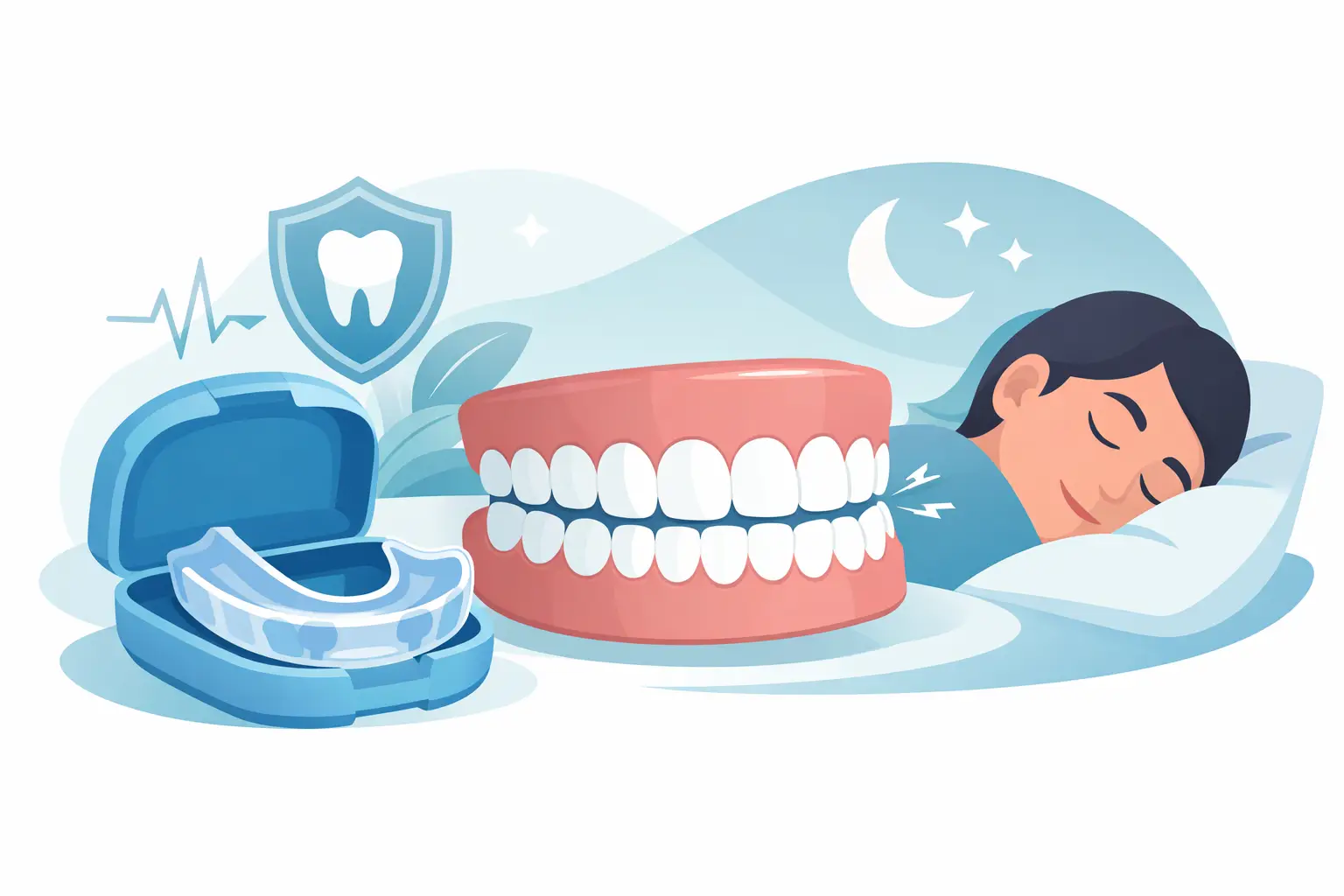
If you wake with a tight jaw, sensitive teeth or a dull headache behind your temples, you are not choosing the best mouthguard for teeth grinding by brand name alone. The right guard depends on how heavily you clench, whether you grind at night, how your bite fits together and whether jaw pain is part of the picture.
That matters because bruxism is not just a noisy habit. Over time, it can flatten tooth edges, chip enamel, loosen dental work and leave the jaw joints overworked. A mouthguard can be very effective, but only when it fits properly, protects the right areas and does not create new problems such as a worse bite or more muscle tension.
What makes the best mouthguard for teeth grinding?
The best option is usually the one that protects your teeth consistently and comfortably enough for you to wear it every night. In practice, that often means a custom-made night guard from a dentist. It is shaped to your exact bite, sits securely and can be adjusted if there are pressure points or signs that your jaw is being pushed into an unhelpful position.
Shop-bought guards can still help in some cases. If your grinding is occasional, your teeth are otherwise healthy and you need short-term protection, an over-the-counter guard may be a reasonable starting point. The trade-off is fit. A bulky or loose guard can be unpleasant to wear, affect sleep and sometimes encourage more clenching because the jaw muscles are working against something unstable.
So when people ask for the best mouthguard for teeth grinding, the honest answer is that there is no single universal product. There is only the best type for your mouth, your symptoms and the amount of force you place through your teeth at night.
Custom vs shop-bought guards
A custom mouthguard is made from impressions or a digital scan of your teeth. That allows a far more precise fit than a boil-and-bite version. It tends to feel slimmer, stay in place better and provide more even contact across the bite. For patients with crowns, veneers, implants or worn teeth, that precision becomes even more important.
Boil-and-bite guards are softened in hot water and then moulded at home. They are easy to find and less expensive upfront, but they can distort during fitting. If the material is too thick, speech and breathing may feel awkward before sleep. If it is too thin, heavy grinders can wear through it surprisingly quickly.
Soft one-size guards are the least predictable. They may feel cushioned at first, but in strong clenchers they can act almost like a chew toy, encouraging more muscle activity rather than calming it. That does not happen in every case, but it is a known issue.
When a custom guard is usually worth it
A professionally made guard is often the better investment if you grind most nights, have already damaged teeth or restorations, wake with jaw pain, or have a history of TMJ symptoms. It is also sensible if previous shop-bought guards have felt uncomfortable or failed quickly.
For many London professionals, the practical point is simple: if you are relying on a guard every night, comfort and reliability matter. A guard left on the bedside table protects nothing.
Which material is best?
Material choice is not just a question of softness. It affects durability, comfort and how the jaw muscles respond.
Hard acrylic guards are commonly recommended for moderate to heavy grinding. They are durable, hold their shape well and can be carefully adjusted by a dentist. Although some patients assume hard means uncomfortable, a well-made hard guard can feel neater and less intrusive than a thick soft one.
Softer guards may suit mild grinders or people who struggle with the feel of a rigid appliance. However, they tend to wear faster and are not always ideal for strong clenching forces.
Dual-laminate guards, with a soft inner surface and harder outer shell, are sometimes chosen when comfort and durability both matter. They can work well, but they are not automatically the best option for every bite.
This is where individual assessment matters. The best guard is not simply the softest or the strongest. It is the one matched to your bite pattern and symptoms.
Upper or lower mouthguard for teeth grinding?
Most night guards are made for the upper teeth, partly because they can be easier to retain without interfering as much with the tongue. That said, lower guards can be a better choice in some mouths, especially where the bite, tooth positions or gag reflex make an upper appliance awkward.
There is no prize for choosing the most common design if it does not suit you. A dentist will usually base that decision on retention, comfort, tooth wear patterns and any existing dental work.
A mouthguard protects teeth, but it does not cure the cause
This is the point many people miss. A guard creates a protective barrier between the teeth. It helps reduce wear, fractures and strain on restorations. What it does not do is stop the brain and muscles trying to clench.
That is why some patients still wake with tired facial muscles even when the guard is doing its job. If stress, poor sleep, airway issues, bite instability or TMJ dysfunction are contributing factors, the guard is only one part of the answer.
For that reason, persistent grinding deserves proper assessment rather than endless replacement guards. Sometimes the better route includes jaw joint evaluation, advice on muscle relaxation, reviewing caffeine and alcohol habits in the evening, or discussing treatment for clenching-related muscle overactivity.
Signs your current guard is not the right one
If your mouthguard leaves you with more jaw pain, falls out at night, feels excessively bulky or shows rapid wear after only a short period, it may not be the right design. The same applies if your bite feels strange in the morning for more than a few minutes after removal.
A guard should feel secure and protective. It should not feel like a compromise you simply put up with. Small fit problems can often be adjusted in a custom guard, which is one reason professionally made appliances tend to offer better long-term value.
How long should a mouthguard last?
That depends on the material and on how forcefully you grind. A lightly used custom guard may last several years. A heavy grinder can wear through one much sooner. Shop-bought guards often need replacing more frequently, particularly if they become misshapen or develop rough edges.
Regular review is sensible. Wear patterns can reveal how active the grinding is, and changes in fit may reflect tooth movement, dental treatment or simple material fatigue.
Cleaning and care matter more than most people think
A night guard sits in a warm, moist environment, so it needs basic daily care. Rinse it after use, clean it gently with a toothbrush and lukewarm water, and store it dry in a ventilated case. Very hot water can warp some materials, which is an easy way to ruin the fit.
If the guard smells unpleasant, looks cloudy or develops cracks, it is time to have it checked. A damaged guard can irritate the gums and may no longer protect the teeth properly.
When to see a dentist instead of buying another guard
If you have frequent headaches, jaw locking, clicking with pain, broken fillings, chipped teeth or a partner who hears loud grinding most nights, it is worth moving beyond trial and error. The same applies if you have veneers, crowns or implants that you want to protect properly.
At Thurloe Street Dental South Kensington, bruxism is approached as both a comfort issue and a tooth-preservation issue. That means looking at the pattern of wear, the jaw muscles, the joints and any existing dental work before recommending the most suitable appliance or next step.
Choosing the best mouthguard for teeth grinding
The best mouthguard for teeth grinding is usually custom-made, carefully fitted and chosen with your bite and symptoms in mind. For occasional mild grinding, a pharmacy option may offer temporary protection. For regular clenching, jaw pain or damaged teeth, a professionally made guard is generally the safer and more effective choice.
If you are unsure, think less about finding the most popular product and more about finding the right diagnosis. A well-made mouthguard can save enamel, protect cosmetic and restorative work, and make mornings feel less tense. That is a far better result than simply buying the next guard on the shelf and hoping for the best.