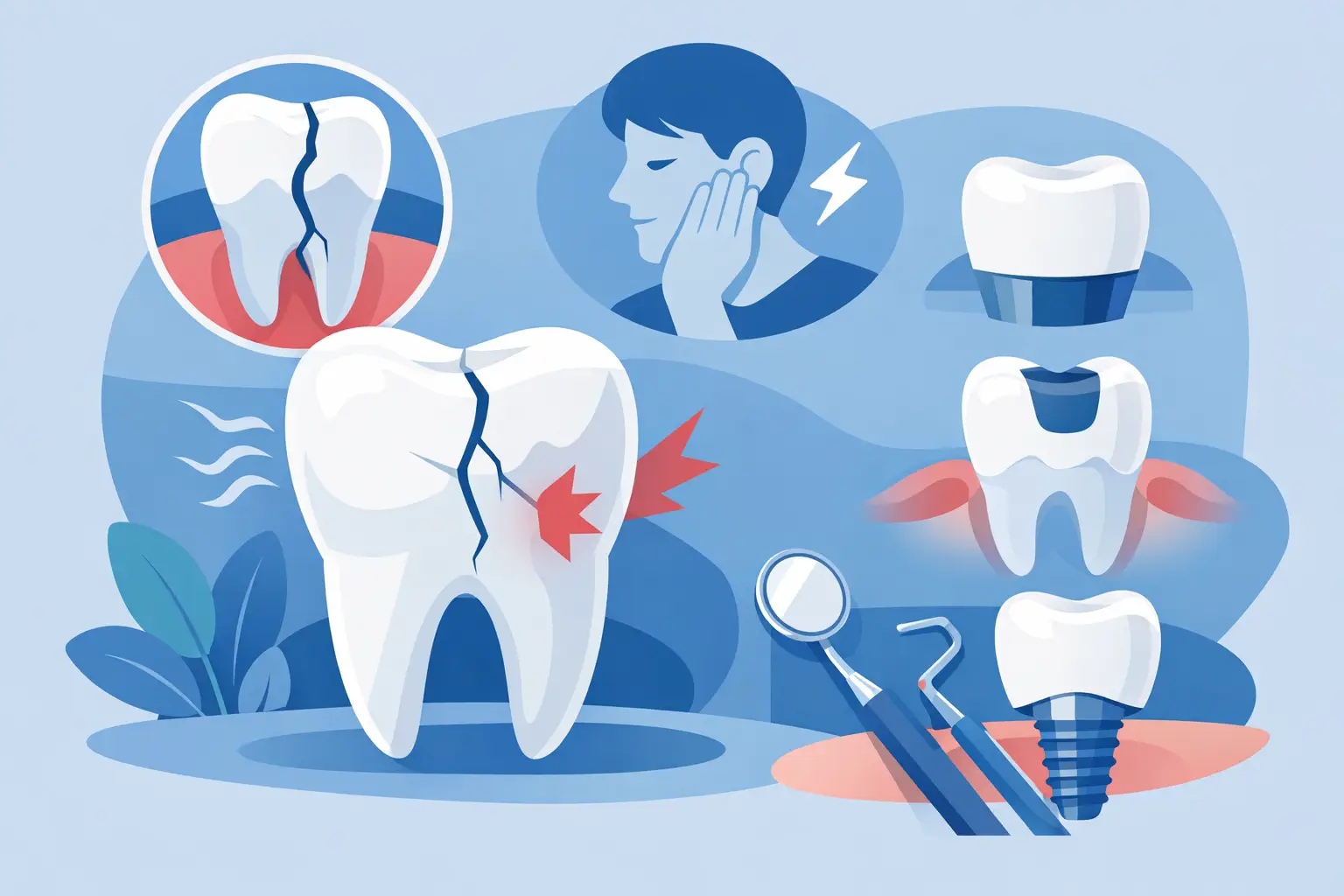
A sharp pain when you bite on one particular spot, followed by relief as you release your teeth, can be an early sign of a cracked tooth. It is easy to dismiss this as sensitivity or a troublesome filling, particularly when the pain comes and goes. However, cracked tooth symptoms and treatment should never be overlooked: a small crack can deepen with everyday chewing, allowing bacteria to reach the inner tooth.
The reassuring news is that prompt assessment often gives your dentist more options to protect the tooth. Treatment is tailored to the depth and position of the crack, as well as whether the nerve has been affected. The earlier you are seen, the more likely it is that a conservative restoration can be considered.
What does a cracked tooth feel like?
A crack is not always visible in a mirror, and it may not cause constant pain. Unlike a fully broken tooth, where a piece has visibly come away, a crack can be fine and run beneath the gumline or inside an existing filling. This is why the symptoms can be frustratingly inconsistent.
The most common sign is pain when biting or chewing, especially on releasing your bite. You may also notice sensitivity to cold, heat or sweet foods, discomfort when eating something hard, or a sudden twinge when your teeth meet at a particular angle. Some people feel a dull, intermittent ache around the tooth or gum.
Occasionally, there may be swelling, tenderness of the gum beside the tooth, or pain that lingers after a hot or cold drink. These can suggest that the dental pulp, the soft tissue containing the nerve and blood supply, is inflamed or infected. Not every sensitive tooth is cracked, but pain linked to pressure deserves a professional check.
Cracked tooth symptoms and treatment: why timing matters
Teeth are strong, but they are not indestructible. Repeated pressure can make a microscopic crack spread over time, much like a line in a windscreen. A crack that begins in the outer enamel may be stabilised with a suitable restoration. If it reaches the pulp, root canal treatment may be needed before the tooth can be protected with a crown. If it extends deeply below the gum or splits the root, saving the tooth may no longer be predictable.
This does not mean that every crack is an emergency requiring immediate extraction. It means a dentist needs to identify the type of crack and assess its prognosis before recommending treatment. Waiting until pain becomes severe can reduce the available choices.
When to arrange an urgent appointment
Contact a dentist promptly if you have severe or worsening toothache, facial swelling, a fever, a broken tooth with a sharp edge, or pain after an injury. These symptoms can indicate infection or trauma that needs timely care. If swelling affects breathing or swallowing, seek emergency medical help immediately.
Even without swelling, arrange an appointment soon if biting is painful or a tooth remains sensitive for more than a day or two. A crack rarely repairs itself, and avoiding the tooth alone does not prevent it from worsening.
Why teeth crack
Cracks are often caused by a combination of pressure and tooth structure rather than one dramatic event. Biting unexpectedly on an olive stone, hard sweet or popcorn kernel can cause a sudden fracture. Teeth may also weaken gradually around large, older fillings, after repeated temperature changes from very hot and cold foods, or following trauma.
Clenching and grinding place substantial force on teeth, particularly overnight when there is no conscious control over the bite. Stress, a bite that is not evenly balanced, and some sleep-related habits can all contribute. Back teeth are commonly affected because they carry the greatest chewing load.
A tooth that has already had root canal treatment can be more brittle, although this does not mean it is destined to fail. Protecting it with a carefully designed crown or onlay is often recommended where enough healthy tooth remains. Your dentist will consider the amount of remaining tooth structure, your bite and the appearance you want to achieve.
How a dentist diagnoses a crack
Diagnosis can take more than a quick look. Your dentist will ask when the discomfort occurs and whether it is linked to biting, temperature or a recent incident. They may examine the tooth under magnification, test your bite on individual cusps, assess sensitivity, and use a light to reveal fine lines. X-rays are useful for checking the surrounding bone, root and signs of infection, although very fine cracks do not always show on an X-ray.
Sometimes a filling or crown needs to be removed to assess the tooth underneath. This is not done routinely, but it may be the clearest way to understand the extent of a suspected crack and plan treatment accurately. A careful diagnosis avoids placing a restoration on a tooth with a poor long-term outlook.
Treatment options for a cracked tooth
The right treatment depends on where the crack starts, how far it travels and whether the pulp is healthy. Your dentist should explain what is predictable, what needs monitoring and any alternatives before treatment begins.
A superficial craze line in enamel may require no treatment at all. These fine surface lines are common and are usually a cosmetic concern rather than a structural problem. If a small piece of enamel has chipped, smoothing, bonding or a discreet composite filling may restore comfort and appearance.
For a crack in a cusp, the pointed chewing section of a tooth, an onlay or crown can hold the tooth together and reduce the risk of further movement. An onlay preserves more natural tooth than a full crown where appropriate, while a crown offers fuller coverage when the tooth is more extensively weakened. Both are designed around the individual tooth and bite.
If the crack has reached the pulp and caused irreversible inflammation or infection, root canal treatment may be needed. The infected or inflamed tissue is carefully removed, the canal is cleaned and sealed, and the tooth is then usually protected with a crown or strong restoration. Modern root canal treatment is performed with local anaesthetic and is intended to relieve pain, not cause it.
A crack that extends down the root or a split tooth cannot always be restored reliably. In these cases, extraction may be the kindest and safest option. Replacement choices can include a dental implant, a bridge or, in some situations, leaving the space under review. The best option depends on the tooth involved, your gums, your bite and your wider dental plans.
What to do before your appointment
Avoid chewing on the affected side and choose softer foods until you have been assessed. Do not test the tooth repeatedly by biting hard foods, as this can make the crack worse. If there is a sharp edge, dental wax from a pharmacy may temporarily protect your cheek or tongue.
Over-the-counter pain relief may help if it is suitable for you and taken according to the packet instructions. Do not place aspirin directly on the tooth or gum, as this can burn the tissue. Keep the area clean with gentle brushing and, if a piece has come away, retain it in a clean container and bring it to your appointment if possible.
Protecting treated and vulnerable teeth
Once a cracked tooth has been restored, regular reviews help ensure the bite remains comfortable and the restoration is doing its job. If you clench or grind, a custom-made night guard can reduce the damaging forces placed on your teeth while you sleep. It is more protective and better fitting than a generic shop-bought guard.
At Thurloe Street Dental South Kensington, treatment planning is focused on protecting both your comfort and the long-term result. For nervous patients, calm, gentle care and sedation options can make essential treatment feel far more manageable. If you suspect a crack, arranging an assessment now is a practical step towards keeping a small problem from becoming a more complicated one.