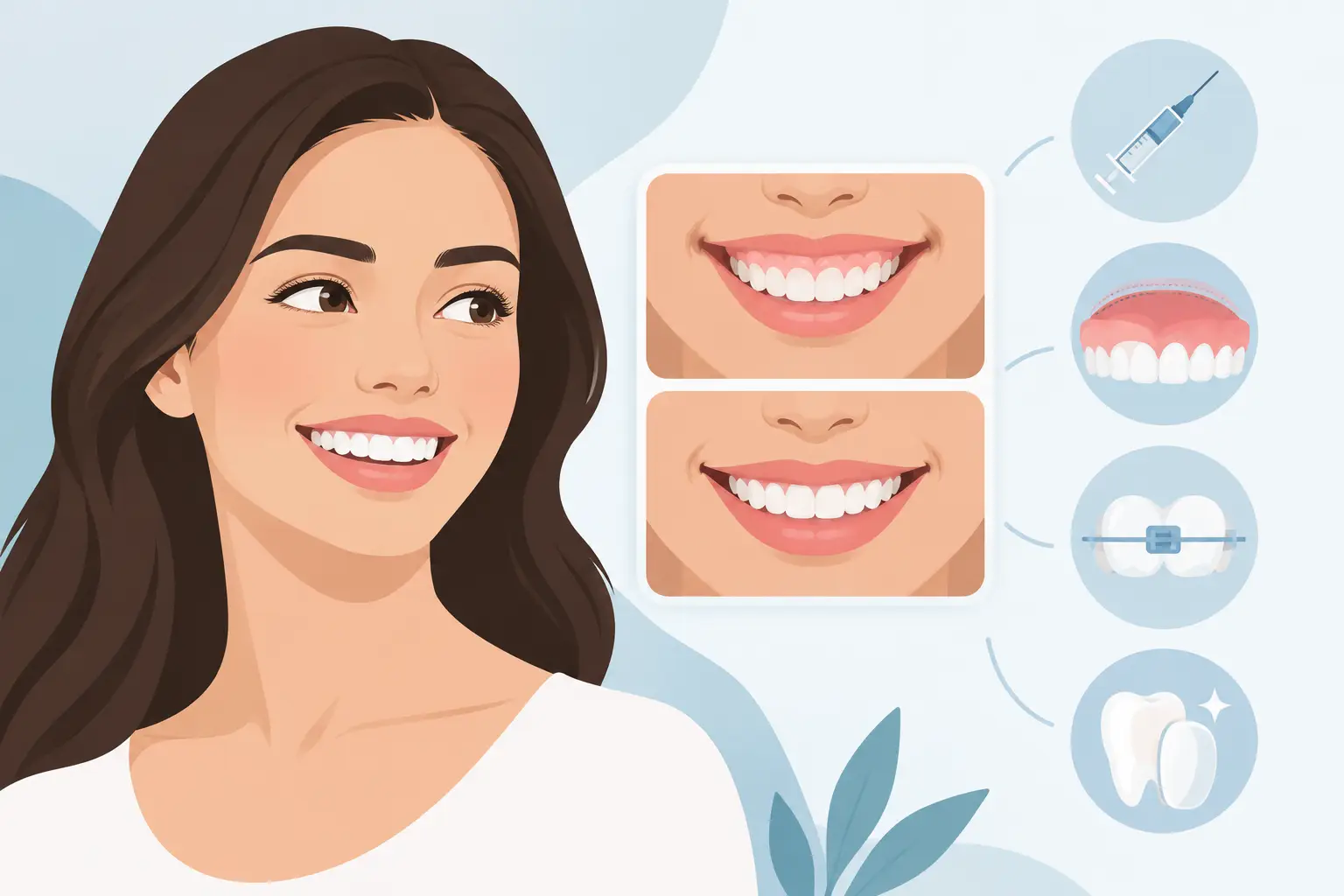
A smile can look healthy, bright and beautifully aligned, yet still feel out of balance when a large amount of gum shows above the top teeth. Gummy smile correction is not about creating one standard look. It is about understanding why the gums are prominent, then choosing the most conservative treatment that gives your smile a more harmonious proportion.
For some people, the change is small and straightforward. For others, the gum display is linked to tooth position, lip movement or the way the upper jaw developed. A careful clinical assessment makes all the difference – particularly when you want a refined cosmetic result that still looks natural when you talk, laugh and smile fully.
What is considered a gummy smile?
There is no fault in showing gum when you smile. It is a natural feature, and many people are perfectly happy with it. However, patients often describe their smile as “too gummy” when more than around 3-4mm of gum tissue is visible above the upper front teeth on a full smile.
What matters most is how it makes you feel. You may find yourself smiling with your lips closed in photographs, covering your mouth when laughing, or feeling that your teeth look short despite being healthy. These are common reasons to ask about cosmetic treatment.
The right result should not look overdone. The aim is to show an attractive balance between the lips, gums and teeth, while protecting the health of the gum tissue and supporting structures.
Why does excess gum show when you smile?
A gummy smile can have one cause or a combination of causes. This is why a treatment recommended for a friend, colleague or social media personality may not be right for you.
Naturally short-looking teeth
Sometimes the teeth are their normal length, but they appear short because gum tissue sits too low over the enamel. This can happen when the gums do not fully recede to their usual position as adult teeth develop. It may also be associated with gum enlargement caused by inflammation, certain medicines or other health factors.
A high lip movement
Some upper lips lift higher than average when smiling, revealing more gum tissue. The lip may look entirely normal at rest, which is why an assessment should include photographs and observation of your natural smile movement rather than simply looking at your teeth in isolation.
Teeth that have erupted differently
The upper front teeth may sit slightly higher in the jaw than expected, creating a greater gap between the biting edges of the teeth and the lip. Orthodontic treatment can sometimes improve this by carefully moving the teeth and their supporting bone.
Upper jaw position
In some cases, the upper jaw has developed in a more downward position. This is known as vertical maxillary excess. It can create a more significant gum display and may be accompanied by bite concerns. A specialist-led plan is particularly important here, as treatment can range from orthodontics to jaw surgery depending on the severity and your goals.
Gummy smile correction treatments
There is no single best treatment. At Thurloe Street Dental South Kensington, planning starts with the cause, the amount of gum displayed, the condition of your teeth and gums, and the type of result you would like to achieve.
Gum contouring for excess gum tissue
Gum contouring, also called gingival recontouring, reshapes the visible gum line to reveal more of the natural tooth surface. It can be an excellent option when the teeth are covered by excess gum tissue but are otherwise well positioned.
Treatment is performed with careful local anaesthetic, and modern techniques allow the gum line to be refined with precision. Healing is usually manageable, although tenderness and a temporary change in eating habits are normal. The final gum shape becomes clearer as the tissues settle over the following weeks.
Where appropriate, contouring may be combined with crown lengthening. This involves adjusting a small amount of gum and, in some cases, supporting bone to create a stable, healthy result. It is more involved than simple cosmetic reshaping, but may be necessary if the gum tissue would otherwise grow back to its original level.
Anti-wrinkle injections for a highly mobile upper lip
When a highly active upper lip is the main reason for gum display, carefully placed anti-wrinkle injections can reduce how far the lip rises when you smile. This is a non-surgical option with little downtime, which appeals to patients who want to test a subtler change.
The trade-off is that the result is temporary, commonly lasting several months, and correct placement is essential. Too much relaxation can affect smile movement or speech, so this treatment needs a clinician with detailed understanding of facial anatomy and a measured approach. It is not suitable for every gummy smile, but can be very effective in the right case.
Orthodontics to improve tooth position
If the teeth sit too low or the bite needs correction, orthodontic treatment may offer the most predictable long-term improvement. Invisalign clear aligners can be suitable for selected patients, particularly where small movements, alignment changes or controlled intrusion of the upper teeth are needed.
Orthodontics takes longer than gum contouring or injections, but it addresses tooth position rather than disguising it. In some cases, this makes it the better investment for both smile appearance and bite function. Attachments, refinements and retainers may be part of the process, so it is worth discussing the full commitment before starting.
Composite bonding, veneers or crowns
After the gum line has been corrected, some patients choose to improve the visible proportions, shape or shade of their teeth with composite bonding, veneers or crowns. This can be helpful where teeth are genuinely small, worn, uneven or heavily restored.
These treatments should not be used simply to compensate for an unassessed gum problem. Good cosmetic dentistry respects the natural tooth structure wherever possible. Whitening, gum reshaping and subtle bonding may achieve a beautiful change with less intervention than multiple veneers.
Specialist surgical treatment
For pronounced gummy smiles caused by upper jaw position, orthognathic surgery may be considered. This is a significant treatment undertaken with specialist hospital-based care, often alongside orthodontics. It is not the first choice for mild cosmetic concerns, but it can be life-changing when jaw position affects the smile, bite and facial balance.
What happens at a gummy smile consultation?
A proper consultation should feel unhurried and clear. Your dentist will examine your gum health, tooth proportions, bite and lip movement, and discuss what you would like to change. Digital photographs, scans and X-rays may be used where clinically appropriate to assess the teeth, bone levels and supporting tissues.
You should also be asked about your medical history and any medicines you take. Bleeding gums, swelling or periodontal disease need attention before elective cosmetic treatment. Healthy gums are the foundation of any attractive smile, and treating inflammation first protects the quality and longevity of the final result.
Your clinician can then explain whether one treatment is enough or whether a staged approach would give a better outcome. You should understand the expected result, healing time, maintenance needs, limitations and costs before making a decision. If you are nervous about dental treatment, say so early. Gentle care, local anaesthetic and, where suitable, sedation options can make the experience far more comfortable.
How long do results last?
Longevity depends on the treatment. Gum contouring and crown lengthening can provide lasting changes when they are correctly planned and your gums remain healthy. Orthodontic results can last for many years with consistent retainer wear. Anti-wrinkle injections require repeat appointments to maintain the effect.
Daily brushing, cleaning between the teeth and regular hygiene visits matter after any cosmetic procedure. Gum recession, inflammation and tooth wear can alter a smile over time, so maintenance is not an afterthought. It is part of protecting your investment in your confidence and oral health.
Choosing the right approach
The best gummy smile correction often looks like no “treatment” at all – simply a smile that feels more like you. A few millimetres can make a meaningful difference, but more treatment is not always better. The safest and most satisfying plan is the one that respects your facial features, keeps your teeth and gums healthy, and fits comfortably with your lifestyle.
If your smile has been holding you back in photographs or everyday conversations, a personal assessment can replace uncertainty with clear, calm options. The first step is simply a conversation about what you notice, what you would like to change and what is realistically possible.