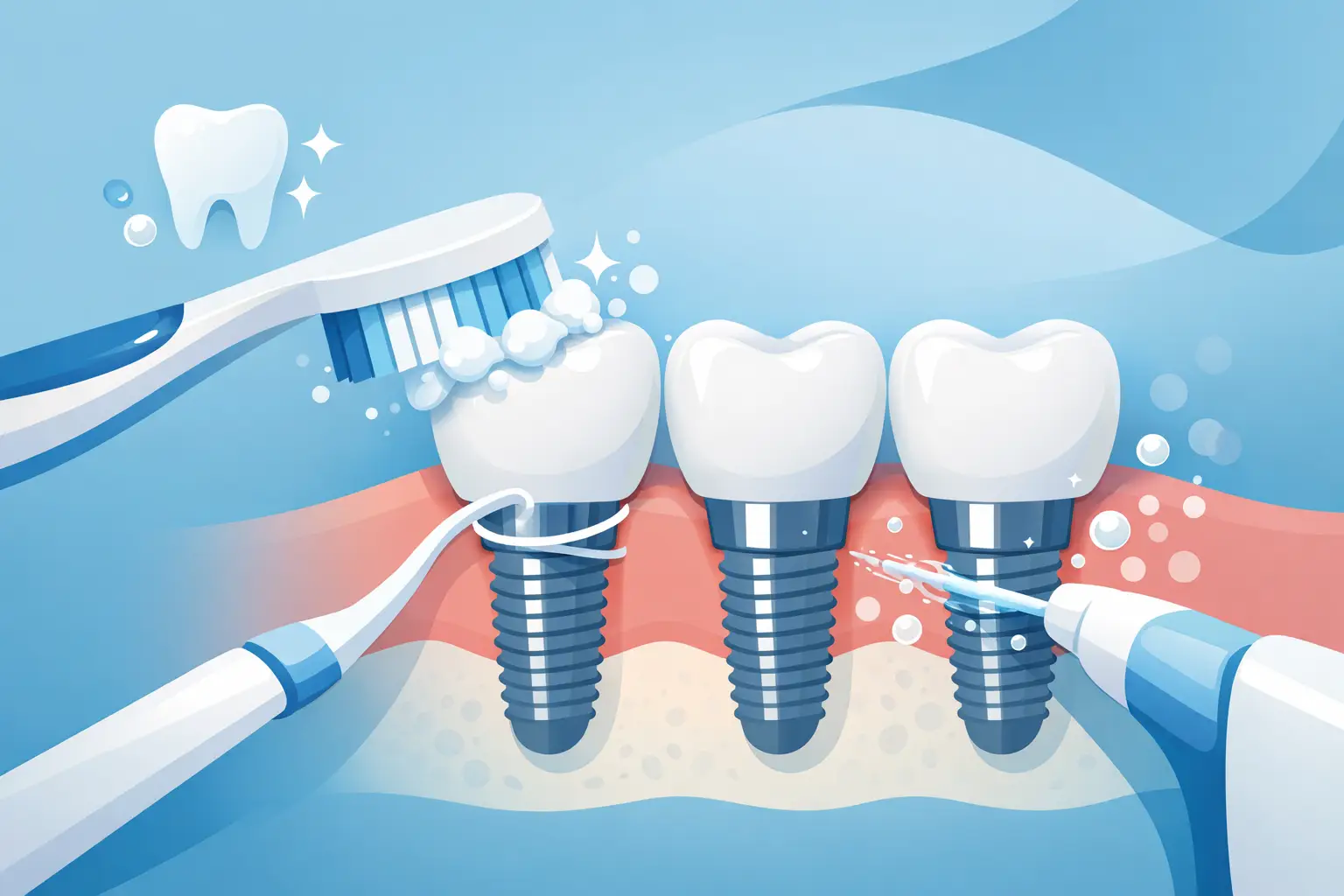
Dental implants are designed to feel secure and natural, so it is easy to forget they still need careful maintenance. If you are wondering how to clean dental implants, the short answer is this: clean them every day, clean them gently, and do not assume implants are immune to gum problems just because they cannot decay.
That last point matters more than many patients realise. The implant itself is artificial, but the gum and bone supporting it are very much alive. When plaque and bacteria sit around an implant, they can irritate the gum and, over time, threaten the stability of the implant. Good home care is what keeps an excellent result looking and feeling excellent.
How to clean dental implants day to day
For most patients, cleaning dental implants is not complicated, but it does need to be consistent. The goal is to remove plaque from the gumline, the implant crown, and the hard-to-reach spaces around it without scratching surfaces or causing unnecessary irritation.
Start with brushing twice a day using a soft-bristled toothbrush. Manual brushes can work very well if your technique is thorough, but many people do better with an electric toothbrush because it helps them maintain even pressure and spend long enough on each area. Pay particular attention to where the gum meets the implant crown. That margin is where plaque tends to collect.
Use small, gentle movements rather than aggressive scrubbing. Brushing too hard does not make an implant cleaner. It usually just makes the gum sore and can contribute to recession over time. If you have a single implant, angle the bristles carefully around all sides. If you have an implant bridge or a full-arch restoration, cleaning underneath the prosthesis becomes just as important as cleaning the visible surfaces.
Interdental cleaning should be part of the routine as well. For many patients, this is the step that makes the biggest difference. Interdental brushes, implant-safe floss, or water flossers can all help, but the best choice depends on the shape of your restoration and the space around it.
Which tools are best for cleaning implants?
There is no single answer that suits every implant. A patient with one implant replacing a back tooth needs something different from someone with an implant-retained bridge or a full set of fixed teeth. Still, a few principles are helpful.
A soft toothbrush is the safest place to start. If you use an electric brush, choose a sensitive setting if you are prone to brushing hard. Toothpaste can be a standard fluoride toothpaste unless your dentist advises otherwise. Very abrasive pastes, especially smoker’s toothpastes or harsh whitening formulas, are usually best avoided because they can roughen surfaces over time.
Interdental brushes are often excellent around implants, especially if the spaces between teeth or beneath a bridge are wide enough to accommodate them. The brush should fit snugly but not forcefully. A brush that is too small may not clean effectively, while one that is too large can traumatise the gum.
Floss can be useful, though technique matters. Standard floss may be enough for some single implants, but implant-specific floss or thicker cleaning tape is often easier around larger restorations. If you have a bridge, floss threaders can help guide the floss underneath.
Water flossers are popular for a reason. They can be particularly helpful for implants because they flush food debris and plaque from difficult areas, especially around full-arch work. They are not always a complete substitute for mechanical cleaning, but they can be a very good addition.
How to clean under implant bridges and full-arch implants
This is where many people need a more personalised routine. Cleaning a single implant crown is usually straightforward. Cleaning under a bridge or a fixed full-arch restoration takes more planning.
Food and plaque can collect underneath the prosthesis where you cannot easily see them. That can lead to unpleasant odour, inflammation, bleeding, and discomfort. Over time, it can become a more serious biological problem.
If you have an implant bridge, you may need a combination of an interdental brush and floss threader to clean beneath the false tooth or connector areas. With full-arch implants, a water flosser is often one of the most practical tools for daily use, but many patients also benefit from specialist brushes designed to reach under the framework.
The exact technique depends on how close the bridge sits to the gum, the contours of the restoration, and how dexterous you are. There is no shame in needing a demonstration. In fact, one of the best investments you can make after implant treatment is having a hygienist or dentist show you exactly how to clean your own implant restoration rather than relying on general advice.
What to avoid when cleaning dental implants
Patients are sometimes so keen to protect their implants that they either over-clean or use the wrong products. Both can create problems.
Hard-bristled brushes are rarely a good idea. Nor are metal toothpicks or any sharp tools used at home to scrape around the implant. These can injure the gum or damage the surface around the restoration. If something feels stuck, it is better to dislodge it with floss, an interdental brush, or a water flosser than to improvise.
Be cautious with abrasive powders, charcoal products, and any toothpaste marketed in a way that suggests heavy-duty stain removal. A clean implant is not achieved by sanding it down. Gentle and regular cleaning is far more effective.
Smoking also deserves a mention here. It is not a cleaning tool, of course, but it does make implant maintenance harder and increases the risk of implant complications. If you smoke and have implants, regular professional review becomes even more important.
Signs your implant needs professional attention
Even patients with excellent routines can sometimes develop inflammation around an implant. The early signs are often subtle, which is why regular maintenance appointments matter.
Bleeding when brushing or flossing is one of the common warning signs. So is persistent bad taste or bad breath localised around the implant. Redness, puffiness, tenderness, or a feeling that the gum looks different from before should not be ignored. In more advanced cases, you might notice recession, discomfort when chewing, or mobility in the crown or bridge.
Not all of these signs mean the implant itself has failed. Sometimes the issue is trapped cement, a poorly cleansable contour, excess bite pressure, or early gum inflammation that can be managed if caught promptly. The difficulty is that problems around implants do not usually improve just because you brush harder at home.
Why hygienist visits matter for implant care
Knowing how to clean dental implants at home is essential, but professional maintenance is what helps keep small issues small. Hygienist visits allow plaque and calculus to be removed from areas you may not be able to reach, and they give your dental team the chance to assess the health of the gum and bone around the implant.
Implant maintenance is not quite the same as a routine scale and polish around natural teeth. The instruments, polishing materials, and approach should be suitable for implants. That is one reason it is worth attending a practice experienced in advanced restorative care. At Thurloe Street Dental South Kensington, patients with implants are typically guided towards a maintenance routine that fits the design of their restoration and their own comfort level.
The interval between visits depends on your risk factors. Someone with excellent home care and one well-positioned implant may need less frequent maintenance than a patient with a history of gum disease, smoking, or a full-arch implant bridge. It depends on the biology as much as the dentistry.
A simple routine most patients can follow
If you want a practical benchmark, brush twice daily with a soft brush, clean between or under the implant every day, and use whatever tools you can manage consistently and comfortably. The best routine is not the one that sounds most impressive. It is the one you will actually do properly every day.
If your implant area bleeds repeatedly, feels sore, traps food constantly, or is awkward to clean no matter what you try, do not assume that is normal. Sometimes the issue is not poor effort but a restoration that needs adjustment or a technique that needs refining.
Implants can last for many years and often for decades, but they do best when daily care is simple, gentle, and tailored to the way your implant has been restored. If you are unsure whether you are cleaning yours properly, a quick review and demonstration can be far more reassuring than guessing. A few small changes to your routine now can protect the comfort, appearance, and longevity of your smile for the long term.