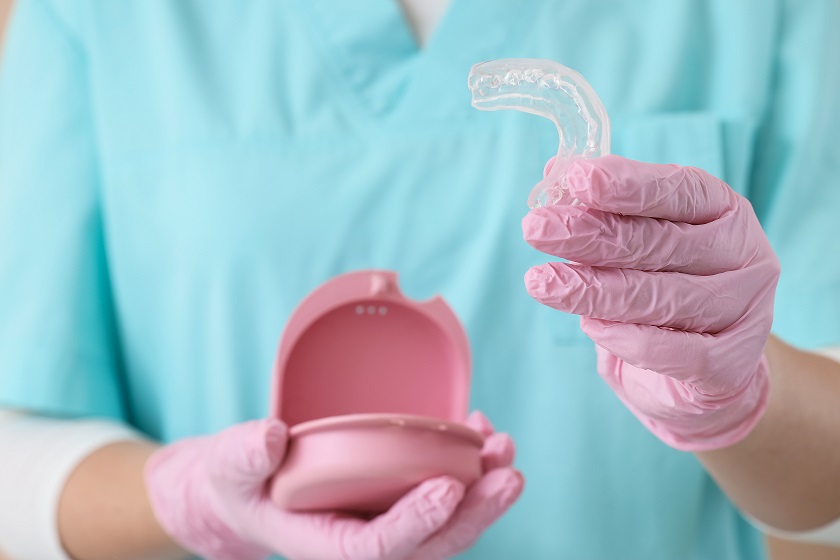
If you wake with tight jaw muscles, tender teeth or a dull headache across your temples, you may already be dealing with the problem a Michigan splint is designed to manage. So, what is a Michigan splint? In simple terms, it is a carefully made hard acrylic bite splint that sits over the teeth – usually the upper teeth – to help protect them from grinding and clenching, while giving the jaw a more stable, balanced contact.
It is not just a generic mouthguard bought online or from a chemist. A Michigan splint is custom-made from detailed records of your bite and adjusted precisely by a dentist. That precision matters, because the aim is not only to put a barrier between the teeth, but also to reduce strain on the jaw joints and muscles in a controlled way.
What is a Michigan splint used for?
A Michigan splint is most often used for bruxism, which means grinding or clenching the teeth, especially at night. Many people do this without realising it. They notice the effects instead – worn edges on teeth, cracked fillings, jaw ache, poor sleep or headaches that seem to start around the face and temples.
It can also be used as part of TMJ management. TMJ refers to the temporomandibular joints, the joints on either side of the jaw that allow you to open and close your mouth. When these joints or the muscles around them are under strain, symptoms can include clicking, limited opening, facial pain and a tired feeling when chewing. A Michigan splint does not cure every TMJ problem, but for the right patient it can reduce loading on the system and make symptoms more manageable.
Dentists also use this type of splint to protect expensive dental work. If you have veneers, crowns, implant restorations or natural teeth that are already showing wear, ongoing grinding can undo careful treatment surprisingly quickly. In that situation, a splint is often as much about prevention as symptom relief.
How a Michigan splint works
The design is based on stable, even contact. When the splint is fitted correctly, the teeth meet against a smooth hard surface in a planned way rather than colliding unevenly with each other. That can help settle overactive jaw muscles and reduce the damaging force placed on individual teeth.
The hard material is important. Patients sometimes assume a softer appliance will be gentler, but soft guards can encourage more chewing or clenching in some people. A Michigan splint is firm and polished, which makes it feel different from sports guards or boil-and-bite appliances. It is designed for controlled contact, not cushioning alone.
There is also a subtle balance to the shape. The surface is adjusted so that when the jaw moves, the contacts guide movement in a way that reduces interference from certain teeth. That level of refinement is why a proper fitting appointment matters. Even a very well-made splint needs fine adjustments in the mouth.
What is a Michigan splint like to wear?
Most patients find it feels strange for the first few nights, then much more natural once they settle into it. Because it is custom-made, it should feel secure rather than loose and bulky. You may notice more saliva at first, and your speech can sound slightly different if you try talking with it in, but that usually improves quickly.
Comfort depends on fit, polish and bite adjustment. A well-made appliance should not dig into the gums or feel sharp. It should be snug enough to stay in place overnight without needing to be clenched to hold it there. If it feels uncomfortable, it usually needs adjustment rather than perseverance.
The first sign that it is working is not always dramatic pain relief. Sometimes patients simply notice they wake with less tension, or their teeth feel less sensitive in the morning. In other cases, the biggest change is that the appliance shows wear marks instead of the teeth. That can be reassuring in itself – the splint is taking the load.
Who might benefit from a Michigan splint?
People who grind or clench at night are the most obvious candidates, but they are not the only ones. If you have recurring jaw pain, unexplained tooth wear, fractures in fillings, aching around the temples or a history of waking with a tight jaw, a proper assessment is worthwhile.
It can be especially useful for patients investing in cosmetic or restorative dentistry. Protecting veneers, bonding, crowns or implant work is part of protecting the result. For image-conscious patients, this can be the difference between dental work that lasts beautifully and treatment that is repeatedly stressed by hidden grinding.
That said, not every jaw problem needs a Michigan splint. Some TMJ symptoms come from joint inflammation, arthritis, posture, stress patterns or habits such as nail biting and daytime clenching. In those cases, a splint may help, but it may need to sit alongside other measures rather than replace them.
Michigan splint vs a night guard
This is where terminology becomes confusing. Many people use the term night guard for any appliance worn during sleep, and technically a Michigan splint is a type of night guard. The difference is in the design and purpose.
A basic night guard may simply protect the teeth from direct contact. A Michigan splint is more specific. It is a hard stabilisation splint made to create even bite contacts and guide jaw movement more carefully. That means it tends to be more detailed in both construction and adjustment.
There is also a difference between a Michigan splint and a sports mouthguard. A sports mouthguard is made to absorb trauma during exercise. It is not intended to manage bite forces in the same precise way and should not be seen as a substitute.
The fitting process
The process usually starts with an examination of the teeth, jaw joints and muscles, along with a discussion about symptoms. Your dentist will want to know when discomfort occurs, whether there are headaches, whether the jaw clicks or locks, and whether there is visible wear on the teeth.
Records are then taken to make the appliance. Depending on the practice, this may involve digital scans, impressions and bite registrations. The laboratory uses these to produce the splint, which is then fitted and adjusted so the contacts are even and comfortable.
Review appointments are an important part of treatment. A Michigan splint is not something that should simply be handed over and forgotten. Small adjustments can make a big difference to comfort and effectiveness, particularly in the first few weeks.
Caring for a Michigan splint
Cleaning is straightforward. It should be rinsed after use and brushed gently with a toothbrush and cool water. Some patients use a mild soap if advised. Very hot water should be avoided because it can distort the appliance.
When not in use, it should be stored in its case and kept away from pets, who seem to find these appliances irresistible. Regular reviews are sensible because the splint can wear over time, and changes in the bite or dental work may mean it needs adjustment or replacement.
Does it work for everyone?
This is where a careful, honest answer matters. A Michigan splint can be very effective, but success depends on the diagnosis. If your symptoms are mainly muscle-related and linked to clenching or grinding, results are often very good. If there is a more complex joint problem, the improvement may be partial or slower.
It also depends on consistency. Wearing the splint occasionally is less likely to help than wearing it as advised. Stress levels, sleep quality and daytime habits matter too. Someone who clenches through the working day may need awareness training and muscle-relaxation strategies, not only a night appliance.
In a calm, well-planned setting such as Thurloe Street Dental South Kensington, the goal is not simply to provide a splint, but to understand why the jaw is under strain and choose the most appropriate treatment around it.
A Michigan splint is best thought of as a precise protective appliance, not a one-size-fits-all fix. For the right patient, it can protect teeth, reduce muscle tension and make mornings much more comfortable. If your jaw feels overworked or your teeth are showing the signs, getting the problem assessed early is often the most sensible next step.