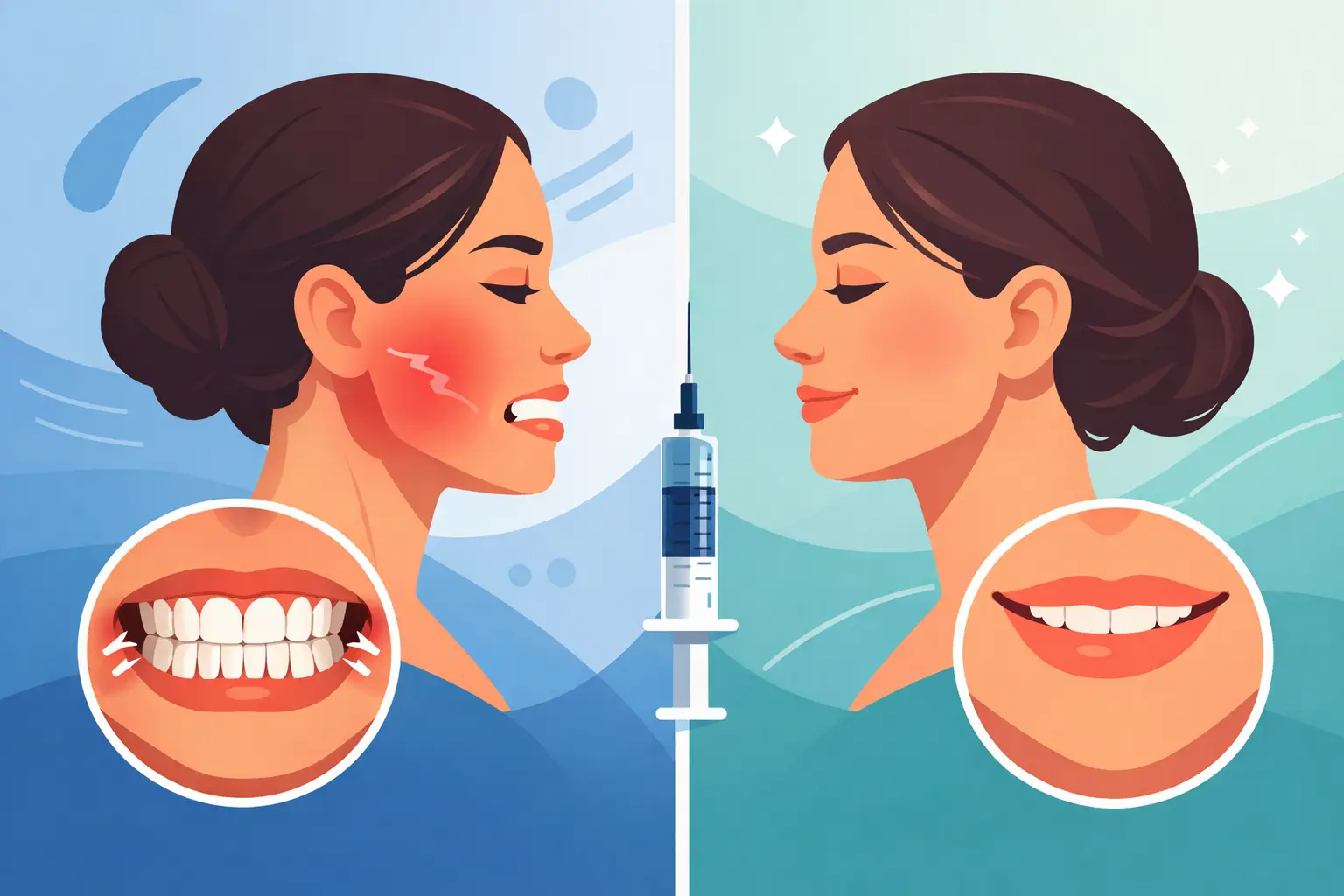
A bruxism botox before after comparison can be striking, but the most meaningful change is not always the one you see in a photograph. For many people, it is waking without a tight jaw, fewer tension headaches, less tooth sensitivity or no longer feeling that their jaw has worked through the night. Where the chewing muscles have become enlarged through persistent clenching, there may also be a gradual softening of a square or heavy lower-face shape.
Botox can be a helpful part of a carefully planned bruxism treatment, particularly when overactive jaw muscles are contributing to pain, wear and tension. It is not a one-size-fits-all treatment, nor a substitute for examining why you grind your teeth in the first place. A proper assessment protects both your comfort and your teeth.
Bruxism Botox Before and After: What Can Change?
Bruxism means clenching or grinding the teeth, often while asleep but sometimes during busy working days, exercise or periods of stress. The masseter muscles at the sides of the jaw can become overworked, creating tenderness, fatigue and a sensation that the jaw is never truly relaxed.
Botulinum toxin injections can reduce the force of contraction in selected jaw muscles. The aim is not to stop you chewing or create a frozen face. It is to lessen excessive muscle activity while retaining normal, comfortable function.
Before treatment, patients may notice a broad or prominent jawline caused by strong masseter muscles, jaw aching on waking, chipped or flattened teeth, headaches around the temples, or a clicking and sore jaw joint. After treatment, the changes tend to fall into two categories: functional relief and facial contour changes.
Functional improvement may include less intense clenching, reduced muscle soreness and fewer tension-related headaches. These improvements are often felt before a visible facial change. If the masseter muscles have enlarged, the lower face can look subtly slimmer or less angular over time as the muscle is used less forcefully. The result should look balanced and natural, not dramatically altered.
The degree of change depends on your facial anatomy, muscle size, dose, injection placement, how strongly you clench and whether other factors are involved. Two patients with the same concern can have very different before and after results.
The Realistic Treatment Timeline
Botox does not produce an instant result. It usually begins to take effect within a few days, with a more noticeable reduction in muscle activity developing over one to two weeks. A review may be advised around this point, depending on your treatment plan.
Pain and tightness can improve during the first fortnight, although persistent jaw-joint symptoms may take longer and may need additional care. A visible reduction in masseter bulk is more gradual. Many patients start to see facial contour changes from around four to six weeks, with the fuller effect becoming clearer over two to three months.
The effects commonly last around three to six months. This is not a fixed timetable. People with particularly strong muscles or longstanding clenching may notice the effect fading sooner, while others find that regular, appropriately spaced treatment helps them maintain a more comfortable baseline. Treatment should be reviewed rather than automatically repeated, so the dose continues to suit your symptoms and goals.
Why photos can be misleading
A useful before and after photograph is taken in the same lighting, angle and facial position. Even then, it only tells part of the story. Weight changes, facial expression, hydration, make-up, posture and camera lenses can all alter the appearance of the jawline.
The most reliable comparison includes how your jaw feels, the frequency of headaches, any tenderness on examination and whether there are fresh signs of wear on the teeth. For someone seeking relief from grinding, these clinical measures matter at least as much as a slimmer lower face.
Botox Is One Part of Bruxism Care
Grinding is rarely explained by muscle strength alone. Stress, disrupted sleep, bite issues, missing teeth, certain medicines, caffeine and alcohol can all play a role. Some people clench mainly in the day, usually without realising it. Others grind at night and only discover it when a partner hears the sound or a dentist identifies tooth wear.
For this reason, a dental assessment should come first. Your clinician can check for cracks, worn enamel, failing restorations, gum problems, jaw-joint tenderness and signs that your bite is under strain. If sleep-disordered breathing is suspected, it may also be appropriate to discuss this with your GP or a relevant specialist.
A bespoke night guard can protect the teeth from the destructive forces of grinding. It does not necessarily stop clenching, but it can reduce damage to enamel, crowns, veneers and fillings. Botox may be considered alongside a guard where muscle overactivity and discomfort remain significant. This combined approach often makes more sense than relying on either option alone.
Other recommendations may include jaw physiotherapy, gentle stretching, identifying daytime clenching habits, improving sleep routines or treating damaged teeth. Where a bite needs rebuilding, the plan should be carefully sequenced. Relaxing the muscles can be useful, but it cannot reverse existing cracks or replace lost tooth structure.
What Happens at a Careful Consultation?
A safe treatment plan starts by listening. You should be able to explain when symptoms occur, what makes them worse, whether you have headaches or jaw noises and what results you would like to see. It is also helpful to discuss previous facial aesthetic treatments, medical history, medicines and any past reactions to injections.
Your clinician will assess the masseter muscles while you gently clench, examine the jaw movement and look closely at the teeth and bite. This helps distinguish muscular clenching from problems that need a different form of treatment, such as a joint disorder, dental infection or a fractured tooth.
If Botox is suitable, the injections themselves are usually quick. A fine needle is used at carefully selected points in the muscle. Most patients describe brief pinches rather than significant discomfort. Mild swelling, redness, tenderness or bruising can occur and usually settles quickly. It is sensible to plan treatment away from an important event if you are concerned about bruising.
Botulinum toxin treatment for bruxism should only be provided after an individual clinical assessment by an appropriately qualified prescriber. It may not be suitable during pregnancy or breastfeeding, for people with certain neuromuscular conditions, or where there is an allergy or other relevant medical concern. Your clinician will discuss suitability and the potential risks in full.
Getting a Natural-Looking Result
A good result respects the way your face works. Injecting too much product, treating the wrong area or overlooking existing jaw weakness can affect chewing comfort or alter facial balance in an unwanted way. Precision matters, especially when the aim is both symptom relief and a refined jawline.
This is why chasing another person’s before and after image is not a sensible treatment goal. A face with naturally broad bone structure will not become narrow simply because the masseter muscle is relaxed. Equally, someone whose concern is mainly tooth wear may experience a very successful outcome without a major visible contour change.
At Thurloe Street Dental South Kensington, bruxism treatment can be considered within the wider picture of your dental health, jaw comfort and facial aesthetics. That joined-up view is valuable when you have crowns, veneers, dental implants or a history of complex restorative work that needs protecting.
When to Seek Dental Advice Promptly
Do not assume every jaw symptom is bruxism. Sudden severe pain, swelling, difficulty opening the mouth, a broken tooth, pain on biting or a change in how your teeth meet need a thorough assessment . These symptoms can point to a dental issue requiring direct treatment rather than muscle-relaxing injections.
If you are waking with a tense jaw, noticing tooth wear or simply tired of managing recurring headaches, a calm dental consultation can provide clarity. The best before and after result is a plan that leaves your jaw more comfortable, your teeth better protected and your appearance still recognisably yours.