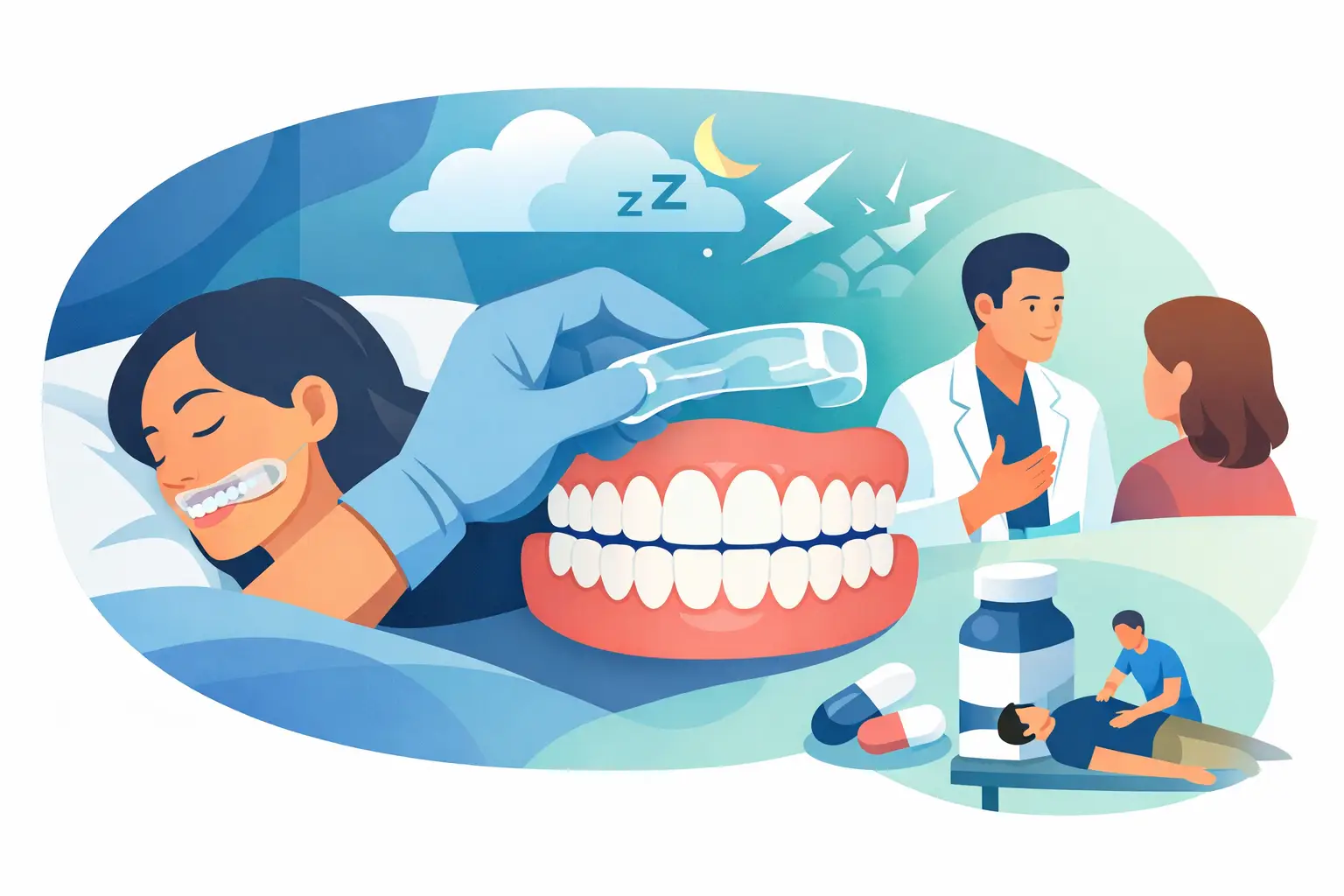
You may only notice it when your jaw feels tight at breakfast, your teeth look flatter than they used to, or your partner mentions grinding in the night. Bruxism treatment options are not one-size-fits-all, because clenching and grinding can stem from stress, sleep habits, bite issues, muscle overactivity, or a combination of several factors. The right plan depends on what is driving it and how much damage or discomfort it is already causing.
Bruxism is common in busy adults, particularly those juggling work pressure, poor sleep, long hours at a screen, or ongoing tension in the face and neck. Some people grind audibly at night. Others clench silently during the day, often without realising it. Over time, that repeated pressure can lead to tooth wear, cracked fillings, jaw pain, headaches, sensitive teeth and symptoms linked with the TMJ, the jaw joints on either side of the face.
Understanding bruxism treatment options
The first step is not choosing a treatment from a menu. It is identifying the pattern. Night-time grinding and daytime clenching can look similar in their effects, but they are not always managed in the same way. A patient who mainly clenches under stress at a desk may need habit awareness and muscle relief. A patient who is wearing through enamel while asleep may need tooth protection as a priority.
A careful dental assessment usually looks at tooth wear, broken restorations, jaw tenderness, the range and comfort of jaw movement, and signs of overworked chewing muscles. If the symptoms suggest a broader sleep issue, that may also need consideration. This matters because treating the pressure without understanding the cause can leave patients disappointed. You may protect the teeth but still wake with headaches if the muscle activity continues unchecked.
The most effective treatments for teeth grinding and clenching
For many patients, the most immediate and reliable option is a custom-made night guard. This is designed to fit precisely over the teeth and act as a protective barrier while you sleep. It does not always stop the grinding itself, but it reduces the damage it causes and can lessen strain on the teeth and jaw. That distinction is worth making. A guard protects. It is not a cure for every form of bruxism.
A professionally made appliance is generally more stable, more comfortable and more durable than a shop-bought version. That matters if you are already clenching heavily. Poorly fitting guards can feel bulky, affect the bite, or end up in a drawer after a week. In practice, patients are far more likely to wear something that feels secure and unobtrusive.
If the grinding has already damaged the teeth, treatment may also involve restoring worn edges, replacing fractured fillings, or covering vulnerable teeth with restorations that can better withstand pressure. This is where timing matters. Sometimes it is sensible to protect first, monitor the pattern, and then restore the smile once the load on the teeth is under better control. In other cases, especially where appearance and function are both being affected, treatment can be planned together.
Botox can also play a useful role in selected cases. When placed carefully into overactive jaw muscles, it can reduce the force of clenching and grinding. For patients with heavy muscle activity, square jaw tension, morning headaches or repeated damage despite using a guard, this can be particularly effective. It is not permanent and needs maintenance, but many patients appreciate that it can ease symptoms while also softening the bulky look of overdeveloped masseter muscles.
That said, Botox is not the answer for everyone. If the main issue is a damaged bite, a broken restoration that is interfering with the way the teeth meet, or stress-related daytime clenching, muscle treatment alone may not fully solve the problem. The best outcomes usually come when it is part of a broader plan rather than a stand-alone fix.
When bite correction is part of bruxism treatment options
Some patients ask whether their bite is the cause. Sometimes it plays a part, sometimes it does not. Bruxism is not always caused by crooked teeth or an uneven bite, but if certain teeth are taking too much force or the bite has changed because of wear, missing teeth or old dental work, that imbalance can add to the strain.
Minor bite adjustment may occasionally help where there is a very clear interference. More involved correction could include replacing worn restorations, straightening the teeth with orthodontics, or rebuilding worn surfaces so the bite functions more evenly. These decisions need care. Irreversible treatment should only be done when there is a clear reason, not as a routine response to every grinding case.
This is especially relevant for patients considering cosmetic dentistry. If teeth are being worn down by bruxism, simply whitening them or placing veneers without addressing the load first can shorten the life of the result. Protecting the investment matters just as much as creating it.
Managing daytime clenching
Daytime bruxism often responds best to awareness and behaviour change. That can sound underwhelming, but it is often the missing piece. Many patients spend hours with their teeth lightly pressed together while concentrating, commuting or scrolling on a mobile phone. The jaw muscles never quite switch off.
Simple changes can help reduce this pattern – keeping the lips together but the teeth apart, relaxing the shoulders, unclenching during focused tasks, and limiting habits such as chewing gum. Warm compresses, gentle jaw stretches and physiotherapy support may also help where the muscles are tender or overworked. If stress is a clear trigger, broader stress management and sleep support can be relevant too.
The key point is that a night guard cannot treat what happens all day. If daytime clenching is part of the picture, it needs direct attention.
When pain points to the TMJ
Not all jaw pain means a joint problem, but bruxism and TMJ symptoms often overlap. Clicking, locking, restricted opening, pain around the ears and difficulty chewing can all sit alongside clenching and grinding. In these cases, treatment has to be more tailored.
Some patients do well with a stabilisation splint, others with muscle-relaxing treatment, jaw exercises, anti-inflammatory advice or coordinated care that focuses on both the teeth and the joints. If the joint itself is inflamed or unstable, simply giving a generic mouthguard may not be enough. A thorough examination helps separate muscle pain from true joint dysfunction.
How to choose between bruxism treatment options
The best plan usually comes down to three questions. First, are we trying to protect the teeth, reduce muscle force, relieve pain, or all three? Secondly, what is driving the habit? Thirdly, how advanced is the damage already?
If the main concern is protecting the teeth at night, a custom guard is often the foundation. If the symptoms are dominated by jaw tension, headaches and muscle bulk, Botox may be worth considering. If worn teeth, a failing bite or repeated fractures are part of the story, restorative or bite treatment may need to be included. And if anxiety or dental fear has delayed care, a calm, gentle approach matters just as much as the technical treatment itself.
At Thurloe Street Dental South Kensington, this kind of treatment is approached conservatively and carefully, with attention to both comfort and long-term predictability. That is particularly important with bruxism, where overtreating can be just as unhelpful as undertreating.
What to expect from treatment
Most patients improve with the right combination of protection, muscle management and practical habit change, but it is worth being honest about expectations. Bruxism can usually be managed very well, yet it may not disappear completely. Stressful periods, poor sleep and life changes can all make it flare again.
The aim is to reduce the harm it causes, keep you comfortable and protect your teeth, jaw joints and dental work over time. That may mean wearing a night guard consistently, having periodic reviews, or repeating muscle-relaxing treatment when needed. It is less about a single quick fix and more about putting the problem under proper control.
If your teeth are chipping, your jaw aches in the morning, or your partner has started commenting on grinding noises at night, it is sensible to have it checked sooner rather than later. Bruxism tends to be easier to manage before the wear becomes obvious, the restorations start failing, or the jaw becomes persistently sore. A calm, tailored plan can make a real difference – not just to your teeth, but to how your whole face feels day to day.