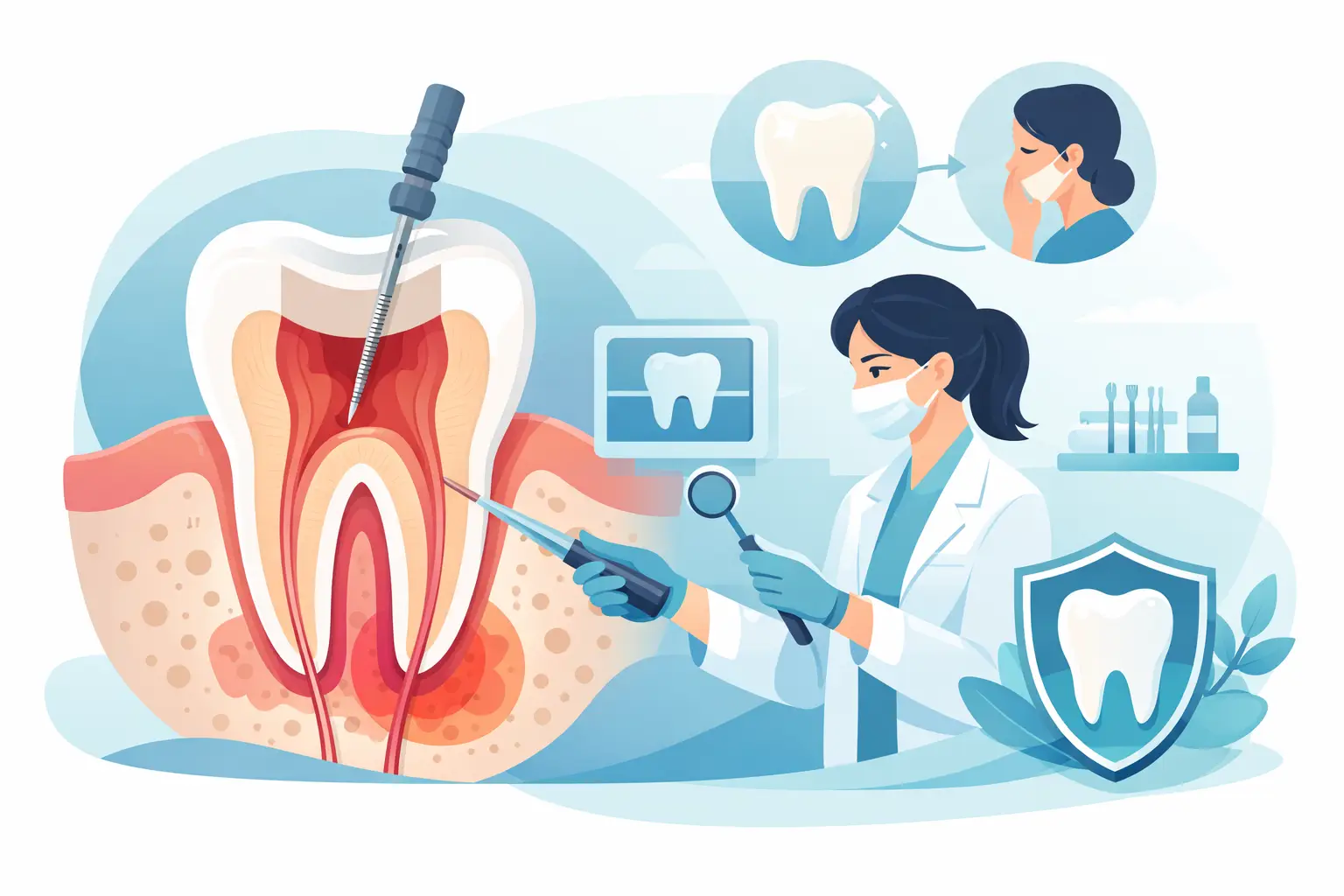
A persistent toothache has a way of taking over your day. It can disturb sleep, make hot drinks unbearable and leave you wondering whether the tooth can be saved. A root canal is often the treatment that makes this possible, removing infection from inside the tooth while preserving its natural structure.
At Thurloe Street Dental South Kensington, we understand that the words “root canal treatment” can make even confident patients feel uneasy. The reality is usually far calmer than its reputation suggests. With modern anaesthetics, careful planning and a comfort-first approach, treatment is designed to relieve pain, not cause it.
What is root canal treatment?
Each tooth has a soft centre called the pulp. It contains nerves and blood vessels that help the tooth develop, but once a tooth is fully formed, it can continue to function without this tissue. If the pulp becomes inflamed or infected, it cannot reliably heal on its own.
Root canal treatment, also known as endodontic treatment, removes the damaged or infected pulp from inside the tooth and its roots. Your dentist then cleans and shapes the tiny root canals, disinfects them and seals them to prevent bacteria re-entering. The tooth is restored with a filling, and in many cases a crown is recommended to protect it from fracture.
The purpose is straightforward: stop infection, ease symptoms and retain your own tooth wherever possible. Saving a natural tooth can help maintain your bite, chewing comfort and the appearance of your smile, while avoiding the need to replace a missing tooth.
Why a tooth may need a root canal
The most common cause is deep decay that has reached the pulp. This can happen when a cavity is left untreated, but it is not the only reason. A cracked tooth, a large or leaking old filling, repeated dental work on the same tooth or trauma from an accident can also damage the pulp.
Sometimes symptoms are obvious. You may notice a sharp or lingering response to hot and cold, pain when biting, swelling near the tooth, a small pimple-like bump on the gum or a tooth that gradually darkens. In other cases, there may be little or no pain at all. An infection can develop slowly and only be found on an X-ray during a routine examination.
Tooth pain does not always mean root canal treatment is needed. Sensitive teeth, gum problems, grinding and a cracked filling can produce similar discomfort. A proper assessment matters because the right treatment depends on the cause.
When to arrange an urgent appointment
Contact a dentist promptly if you have facial swelling, severe or worsening toothache, pain that prevents you sleeping, a loose tooth after an injury, or swelling that affects swallowing or breathing. The latter requires urgent medical attention.
A dental emergency appointment can identify the source of the problem and provide relief. Occasionally, the first visit focuses on settling acute pain or drainage before the root canal is completed. This is not a failure of treatment planning – it can be the safest and most comfortable way to manage a significant infection.
What happens during a root canal appointment?
Your dentist will begin with a detailed examination, often including X-rays to assess the tooth roots and surrounding bone. They will explain whether the tooth is suitable for treatment, the likely number of visits and how it should be restored afterwards.
On the day of treatment, the area is numbed thoroughly with local anaesthetic. You should not feel pain, although you may notice pressure or vibration. A small protective sheet called a rubber dam is placed around the tooth. This keeps the working area clean and prevents moisture or bacteria from entering during treatment.
The dentist creates a small opening in the tooth to reach the pulp, then uses fine instruments and disinfecting solutions to clean the canals. Modern techniques allow the dentist to measure and shape these spaces precisely. Once they are clean, the canals are filled and sealed. The access opening is restored, either with a permanent filling or a temporary restoration if a further visit is needed.
Many front teeth can be treated in one appointment. Back teeth often have more roots and canals, so may require longer treatment or more than one visit. The complexity of the tooth, the extent of infection and whether it has been treated before all influence the approach.
Does a root canal hurt?
This is the question most patients ask, and understandably so. Root canal treatment is performed to remove the source of dental pain. With effective local anaesthetic, most people find the procedure comparable to having a filling, particularly once the tooth has settled.
It is normal to experience mild tenderness when biting for a few days afterwards, especially if the tooth was very painful or infected beforehand. Over-the-counter pain relief may be suitable for many patients when taken as directed, but your dentist will advise what is appropriate for you. If discomfort becomes severe, swelling develops or symptoms do not improve, contact the practice without delay.
For nervous patients, comfort begins before treatment starts. Let the team know about any previous difficult experiences, gag reflex, fear of injections or concerns about feeling out of control. Treatment can be explained step by step, paced around you and supported by intravenous sedation where clinically suitable. Sedation does not replace local anaesthetic, but it can help deeply anxious patients feel relaxed and able to proceed with essential care.
Why the final restoration matters
Cleaning the infection is only part of protecting the tooth. A root-treated tooth can become more brittle over time, particularly if it has lost a large amount of structure through decay or an old filling. Back teeth take substantial chewing forces, which is why a crown is frequently advised after treatment.
A crown covers the remaining tooth and helps reduce the risk of cracks. In some cases, a strong bonded filling is sufficient instead. Your dentist will consider how much healthy tooth remains, where the tooth sits in your mouth, your bite and whether you clench or grind your teeth.
This is one reason it is worth completing the recommended restoration promptly. A successfully treated tooth can still fail if it fractures or bacteria enter through a broken filling. If you grind your teeth at night, a custom bite guard may also be suggested to protect both the restored tooth and the rest of your smile.
Root canal treatment versus extraction
When a tooth is badly infected, extraction may seem like the faster solution. Sometimes it is necessary, particularly if the tooth is too fractured, severely decayed below the gum line or lacks enough supporting bone to restore predictably. However, removing a tooth has consequences that should be considered carefully.
A gap can allow neighbouring teeth to drift and may affect how you chew. Replacing the tooth with a bridge, denture or dental implant may be recommended, each with its own treatment time, cost and suitability considerations. Where a tooth has a sound long-term prognosis, root canal treatment is often the more conservative option because it keeps your natural tooth in place.
There is no one-size-fits-all answer. A clear clinical assessment should include the condition of the tooth, the health of the surrounding gums and bone, your wider dental needs and your preferences. The aim is not simply to treat the immediate pain, but to choose the option that offers the best long-term result for you.
Caring for your tooth after treatment
Until the tooth has its final restoration, avoid biting hard foods on that side where possible. Continue brushing twice daily with fluoride toothpaste and clean between your teeth every day. A treated tooth still needs the same careful preventive care as every other tooth, because it can still develop decay or gum disease around it.
Regular dental examinations allow your dentist to monitor the tooth and the restoration over time. If you notice a new crack, a loose crown, recurring tenderness or swelling, arrange a review early rather than waiting for the problem to progress.
A root canal is not something to fear or put off. It is a precise, tooth-saving treatment that can turn persistent pain into lasting comfort – and the sooner the cause is assessed, the more options you are likely to have.