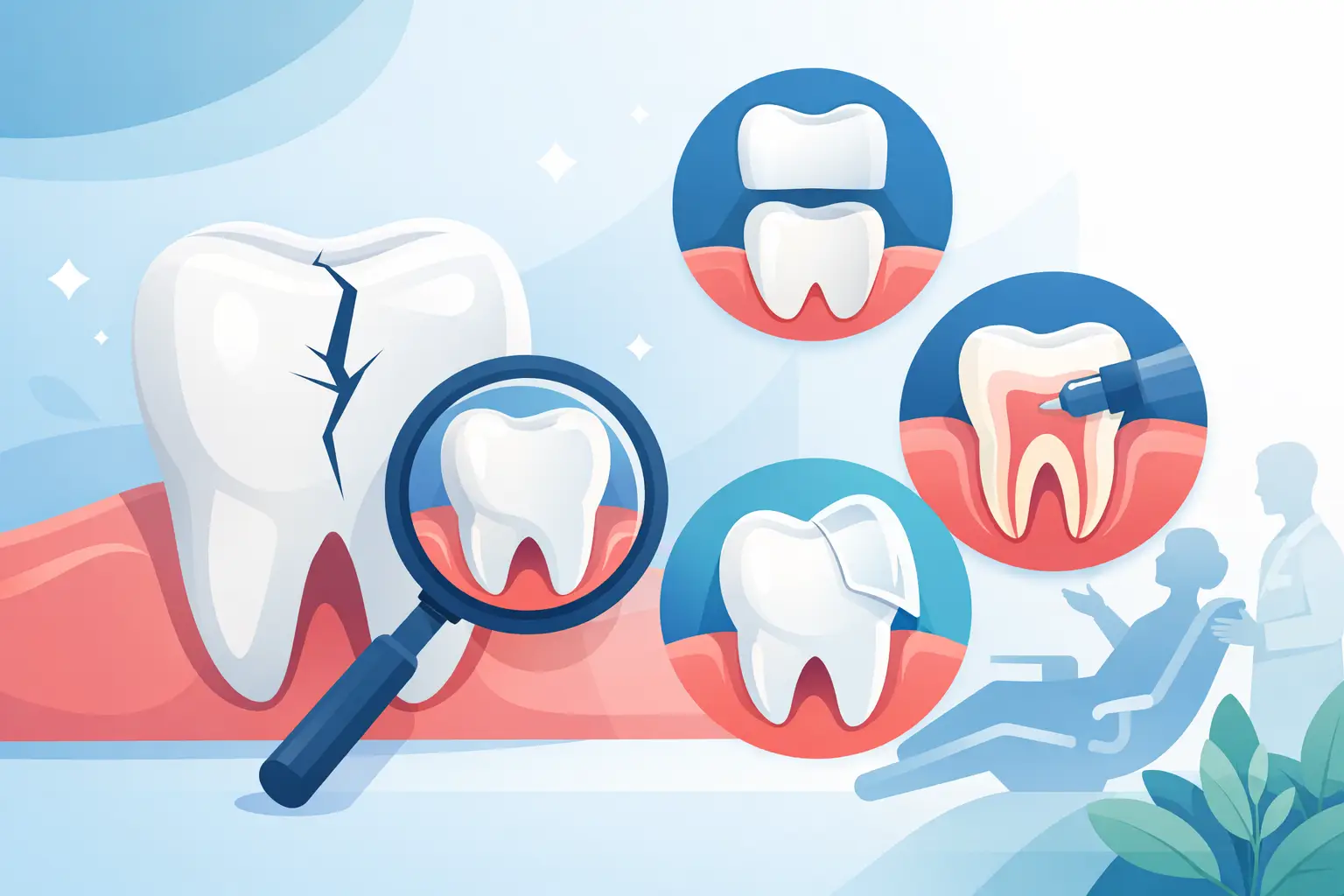
A sharp pain when you bite down, a sudden sensitivity to cold, or the feeling that something is not quite right with a tooth can be unsettling. Can a cracked tooth be saved? In many cases, yes – especially when it is assessed and treated early. The right treatment depends on where the crack runs, how deep it is and whether the tooth’s nerve or root has been affected.
A cracked tooth will not heal by itself. Every bite can allow the crack to flex or deepen, which is why prompt dental assessment gives you the best chance of keeping your natural tooth comfortable, functional and attractive.
Can a cracked tooth be saved if it hurts?
Pain does not automatically mean a tooth needs to be removed. It does, however, mean the tooth needs careful assessment. Cracked teeth can be difficult to diagnose because the crack may be finer than a hair and may not show clearly on an ordinary X-ray. Your dentist will examine the tooth, assess your bite, test its response and may use magnification, light or imaging to understand the extent of the problem.
A tooth can often be saved when the crack is limited to the enamel or dentine, the layers above the root. A protective restoration, such as a filling, onlay or crown, can hold the tooth together and prevent the fracture from spreading. If the crack has reached the pulp, the soft tissue containing the nerve and blood supply, root canal treatment may be needed before the tooth is protected with a crown.
The more challenging situation is a vertical root fracture – a crack extending down into the root. These fractures are not always repairable, particularly if they reach below the gum line or allow infection to develop around the root. Even then, the answer is not always straightforward. A multi-rooted tooth may sometimes have one damaged root treated or removed while the remaining part of the tooth is restored.
What type of crack do you have?
Not every line on a tooth is a serious fracture. Small surface lines, often called craze lines, are common in adults. They usually affect only enamel and are often cosmetic rather than painful. They may be polished, monitored or improved with cosmetic treatment if their appearance concerns you, but they do not usually require urgent intervention.
A chipped cusp is different. This is when a small piece of the biting surface breaks away, often around an old filling. It may feel sharp or cause sensitivity, but it can frequently be restored with a tooth-coloured filling, ceramic onlay or crown.
A deeper cracked tooth tends to cause a distinctive pattern of symptoms: pain on biting, pain as you release the bite, intermittent sensitivity to hot or cold drinks, or discomfort that seems difficult to locate. It can be frustrating because the pain may come and go. Do not assume it has settled simply because symptoms disappear for a few days.
A split tooth is generally more advanced. It means the crack has travelled far enough that sections of the tooth have begun to separate. Saving the entire tooth may no longer be possible, but a dentist may still be able to preserve part of it depending on the crack’s position. A fracture that begins at the root and travels upwards is usually the most difficult to treat.
Treatment options that protect the tooth
The goal is always to use the least invasive treatment that will give the tooth reliable protection. A small, stable crack may be managed by smoothing a sharp edge, replacing a weakened filling or monitoring the area with clear advice on symptoms to watch for.
When more reinforcement is needed, a bonded filling or ceramic onlay can restore the missing or weakened section. An onlay is made to fit precisely over the affected part of the tooth and can be a conservative alternative to a full crown in suitable cases.
For a tooth with a substantial crack, a crown is often the most dependable option. It covers the visible part of the tooth like a protective shell, helping to reduce flexing under chewing pressure. Crowns can be made in natural-looking materials, so protection does not need to compromise the appearance of your smile.
If bacteria or inflammation have reached the nerve, root canal treatment removes the damaged tissue inside the tooth, disinfects the root canals and seals them. The tooth is then commonly restored with a crown because root-treated teeth can be more vulnerable to fracture. Root canal treatment is designed to relieve infection and preserve the natural tooth, not to cause pain. Modern techniques and effective local anaesthetic make treatment far more comfortable than many patients expect.
Extraction is considered when a crack cannot be predictably repaired. This may feel disappointing, but removing a severely fractured tooth can prevent recurring infection and pain. Your dentist can then discuss suitable replacement options, such as a dental implant, bridge or, in some situations, a removable restoration. The best choice depends on your oral health, bite, bone support, neighbouring teeth and cosmetic priorities.
When a cracked tooth needs urgent care
Arrange a dental appointment as soon as possible if you think a tooth has cracked, even if the pain is mild. Same-day or urgent care is particularly sensible if you have facial swelling, severe throbbing pain, a loose piece of tooth, fever, a bad taste in the mouth, or pain that prevents you from eating or sleeping.
Until you are seen, avoid chewing on that side and choose soft foods. Avoid very hot, cold or sugary drinks if they trigger sensitivity. If an edge is sharp, orthodontic wax can provide temporary protection for your cheek or tongue. Over-the-counter pain relief may help when taken according to the packet instructions and if it is safe for you, but do not place aspirin or painkillers directly on the tooth or gum.
If a large piece of tooth has broken away, keep it if you can. Place it in milk or saliva and bring it to your appointment. It may not always be possible to reattach it, but it can help your dentist assess what has happened.
Why cracked teeth happen
Teeth are strong, but they are not indestructible. Cracks can result from biting unexpectedly hard on an olive stone, popcorn kernel or hard sweet. They are also more likely when a tooth has a large old filling, has been weakened by decay, or has already undergone repeated dental work.
Clenching and grinding place intense, repeated pressure on teeth, often while you are asleep. Over time, this can create or worsen cracks, flatten biting surfaces and strain the jaw muscles. A custom-made night guard can protect teeth from grinding forces, while treatment for bruxism may also address the underlying muscle activity where appropriate.
Changes in temperature can contribute too. Repeatedly moving between very hot and very cold foods causes teeth and restorations to expand and contract at slightly different rates. This is rarely the sole cause of a crack, but it can aggravate a tooth that is already weakened.
How to give a cracked tooth the best chance
Speed matters, but so does protecting the tooth after treatment. Once restored, avoid using teeth to open packaging, cut thread or hold hard objects. If you clench or grind, wear any prescribed night guard consistently. Regular examinations allow your dentist to monitor old fillings, crowns and early signs of wear before they become a larger problem.
For nervous patients, delaying an appointment because of dental anxiety can make a small crack harder to save. A calm, gentle practice can talk through each stage, use effective anaesthesia and discuss sedation where clinically appropriate. At Thurloe Street Dental South Kensington, the focus is on making urgent and restorative care feel clear, comfortable and manageable.
A cracked tooth is rarely something to watch and wait with. Early treatment may be as simple as a protective restoration; waiting can turn a repairable crack into a more complex problem. If a tooth feels different when you bite, arranging an assessment now is a practical step towards protecting your comfort and your smile.